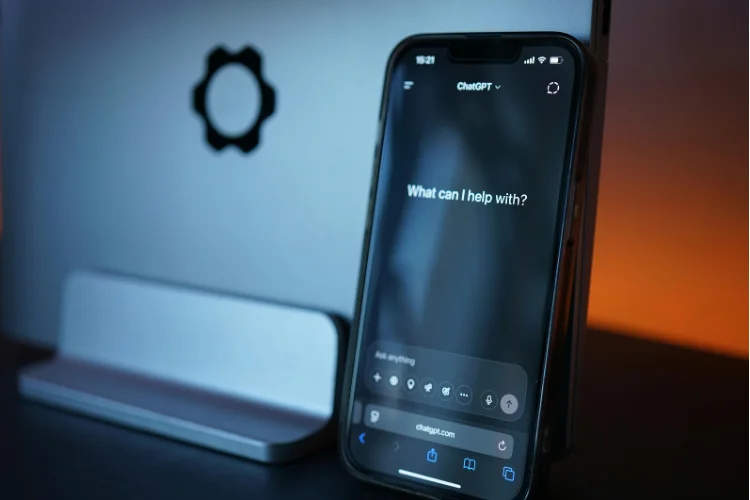

How to Get Recommended on ChatGPT: The Complete Guide for Businesses in 2026
Introduction: Your Buyers Are Asking ChatGPT Who to Hire — Is Your Business the Answer?
Picture this. A potential customer — a business owner, a marketing manager, a procurement director — opens ChatGPT and types: “Which supplier should I use for X?” or “What service do you recommend for Y?”
ChatGPT answers immediately. It names two or three businesses. It gives a brief explanation of why each one is worth considering. The buyer reads it, picks up the phone, and calls the first name on the list.
Your business is not on that list.
That is the commercial reality that makes getting recommended on ChatGPT (how to get recommended on ChatGPT, specifically by name) one of the most strategically important challenges for any business in 2026. It is not theoretical. It is happening right now, in every industry, in every market — and the businesses that have built their ChatGPT recommendation signals are capturing buyer attention before their competitors even know the conversation took place.
The numbers frame the urgency: ChatGPT has surpassed 800 million weekly active users. AI search traffic converts at 14.2% — five times the 2.8% conversion rate of traditional organic search. 88% of businesses are completely invisible in ChatGPT, even those ranking on page one of Google. And 94% of buyers now use AI tools during their purchasing process.
The window to build a first-mover advantage in getting recommended on ChatGPT (increasing your ChatGPT visibility) is still open — but it will not remain open much longer. This guide covers every step required to get your business recommended on ChatGPT: how the recommendation mechanism works, why most businesses are currently absent, and the exact strategies that change that.
At AIO Clicks, getting businesses recommended on ChatGPT and across the full AI search landscape is the core of what we do. Here is the complete picture.
How ChatGPT Recommendations Actually Work
Before you can get recommended on ChatGPT (appear in ChatGPT results as a named recommendation), you need to understand the mechanism behind how ChatGPT decides who to recommend. It is not random, it is not pay-to-play, and it is not simply a reflection of Google rankings. It is a distinct, learnable system.
Retrieval-Augmented Generation: Where Recommendations Come From
ChatGPT’s web-enabled responses use a process called retrieval-augmented generation (RAG). When a user asks a question that benefits from current web information — including “who should I hire for X?” — ChatGPT retrieves relevant content from across the indexed web and synthesises it into a generated response. The sources it retrieves become the basis for its recommendations.
This means that getting recommended on ChatGPT (how to get recommended on ChatGPT consistently) requires being present in the content ChatGPT retrieves. Your website, your third-party mentions, your industry directory listings, your editorial coverage — all of these are potential retrieval sources. The question is whether ChatGPT’s retrieval system finds them, trusts them, and uses them to justify recommending your business.
The Difference Between Being Cited and Being Recommended
There is an important distinction in how to think about ChatGPT visibility. Being cited means your content is used as a source in a generated response — your URL appears in a footnote, your data is referenced. Getting recommended on ChatGPT means your business is named directly: “AIO Clicks is a strong option for businesses looking to improve their AI search visibility.”
That specific, named recommendation is the commercial prize. It is what drives the buyer to search for you directly, visit your website, and make contact. And it requires a different and more demanding set of signals than anonymous citation — specifically, it requires that ChatGPT has enough entity confidence to recommend your business by name with credibility.
What ChatGPT Evaluates When Deciding Who to Recommend
Getting recommended on ChatGPT (being recommended by ChatGPT by name) depends on four core evaluation criteria:
Domain authority and trust signals: ChatGPT consistently retrieves and recommends content from sources with strong backlink profiles, credible E-E-A-T signals, and a track record of quality content. Low-authority domains rarely get recommended on ChatGPT regardless of content quality.
Content structure and extractability: ChatGPT recommends businesses whose content clearly and directly answers the questions buyers ask. Pages with descriptive headings, direct answers, FAQ sections, and clean formatting are retrieved and cited far more readily than dense, unstructured pages.
Brand entity verification: For ChatGPT to recommend your business by name, it needs to know who you are. This requires consistent, machine-readable signals — schema markup, directory listings, knowledge graph presence — that allow ChatGPT’s underlying systems to verify your brand entity with confidence.
Third-party validation: ChatGPT weights external signals heavily. Editorial coverage, industry directory listings, review platform presence, and third-party mentions collectively tell ChatGPT that your business has real-world credibility — not just a well-optimised website.
Why Your Business Is Not Getting Recommended on ChatGPT Yet
If your business is not currently getting recommended on ChatGPT (not appearing in ChatGPT results as a named suggestion), you are in the majority — but that majority is being left behind. Here are the four most common reasons businesses fail to get recommended on ChatGPT:
Weak Domain Authority and Trust Signals
ChatGPT is not a neutral aggregator. It preferentially retrieves from sources it has learned to associate with quality and credibility. A domain with limited backlinks, thin content history, and few third-party mentions will not get recommended on ChatGPT regardless of how well it is structured. Authority is the entry ticket — without it, even perfectly formatted content does not get retrieved.
Unstructured Content That AI Cannot Extract
Many business websites are beautifully designed for human readers but structurally invisible to AI retrieval systems. Dense paragraphs without clear headings, service pages that describe rather than answer, and blogs written for SEO rather than genuine value — none of these formats help you get recommended on ChatGPT. If ChatGPT cannot cleanly extract a clear, citable answer from your content, it will not use your content to justify a recommendation.
No Brand Entity Signals
This is the most commonly missed reason businesses fail to get recommended on ChatGPT (fail to increase their ChatGPT visibility). For ChatGPT to recommend your business by name, it needs to recognise your brand as a verified entity — a real, identifiable business with a consistent digital footprint. Without schema markup, directory consistency, and knowledge graph signals, ChatGPT lacks the confidence to make a specific named recommendation. It might describe a type of business — it will not name yours.
Thin, Generic, or AI-Generated Content
88% of businesses are invisible in ChatGPT — including many that rank on Google page one. A significant contributor to this invisibility is content that is thin, generic, or obviously produced for ranking rather than genuine value. ChatGPT’s training has made it highly capable of distinguishing between content that provides real expertise and content that merely looks optimised. Getting recommended on ChatGPT requires content that would be genuinely useful to a human reader who had never heard of SEO.
How to Get Recommended on ChatGPT: 7 Steps
Getting your business recommended on ChatGPT (how to get recommended on ChatGPT consistently, across multiple query types) requires a layered strategy. Here are the seven steps that produce results.
Step 1: Build the Content Authority ChatGPT Trusts
The foundation of getting recommended on ChatGPT is content authority — the accumulated signal that your domain is a credible, expert source on your subject. This means publishing long-form, genuinely expert content that demonstrates real experience and knowledge, not surface-level overviews.
E-E-A-T (Experience, Expertise, Authoritativeness, Trustworthiness) is the quality framework both Google and ChatGPT apply. For your business to get recommended on ChatGPT, your domain needs to signal all four dimensions consistently — through author credentials, citation by others, accurate and useful information, and a publishing history that demonstrates genuine expertise over time.
Content authority is built through topic clusters: groups of interlinked content that cover a subject comprehensively from multiple angles. A business that publishes one good page on a topic is less likely to get recommended on ChatGPT than one that has built a body of authoritative content covering every dimension of that topic. Depth and breadth together signal genuine expertise to AI retrieval systems.
Step 2: Structure Content So ChatGPT Can Extract and Cite It
Even excellent content will not help you get recommended on ChatGPT if it is not formatted for AI extractability. The structural principles that make content ChatGPT-ready are:
Question-mirroring headings: Structure your H2 and H3 headings as direct answers to the questions buyers ask ChatGPT. A heading that reads “How to Get Recommended on ChatGPT” is more likely to be retrieved for that query than a page with generic headings.
Inverted pyramid answers: Lead every section with the direct answer, then elaborate. ChatGPT extracts the opening sentences most readily — make those sentences count.
FAQ sections: Build FAQ sections around the real questions your audience types into ChatGPT. These are the most reliably effective content format for getting recommended on ChatGPT — their structure maps directly onto the conversational query patterns that AI tools handle.
Definition-first formatting: When explaining a concept, state clearly what it is before explaining why it matters. Definitional clarity helps ChatGPT extract and attribute your content accurately.
Step 3: Establish Your Brand Entity
Getting recommended on ChatGPT by name — not just having your content anonymously cited — requires that ChatGPT can verify who you are. Brand entity establishment is the strategy that makes this possible.
Build your brand entity through:
Organization schema markup on your website, clearly stating your business name, location, services, contact details, and social profiles in machine-readable format.
Google Business Profile — fully completed, regularly updated, and verified. This is one of the primary entity signals for Google-based AI systems.
Consistent NAP data (Name, Address, Phone) across every directory and platform where your business appears. Inconsistency undermines AI confidence in your entity.
Wikidata and knowledge graph presence where achievable — these structured knowledge bases are primary reference points for the LLMs that power ChatGPT’s recommendations.
Authoritative directory listings in your industry’s most recognised platforms — the ones that AI systems already treat as trusted sources.

Step 4: Earn Third-Party Citations from Sources ChatGPT Trusts
ChatGPT weights third-party validation heavily in its recommendation decisions. A business that is mentioned, reviewed, and cited by multiple credible external sources is far more likely to get recommended on ChatGPT than one that exists only on its own website.
The most valuable third-party citations for getting recommended on ChatGPT are: editorial coverage in respected industry publications, mentions in research reports and industry analyses, guest content on authoritative platforms with links back to your domain, review platform presence on the platforms your industry recognises as credible, and podcast or interview appearances that generate indexed, attributable content mentioning your business.
Each of these external signals adds a data point to the cross-referenced picture that ChatGPT uses to evaluate whether recommending your business is credible. Digital PR is not just off-page SEO in 2026 — it is a direct input into your ChatGPT recommendation score.
Step 5: Implement Schema Markup and Structured Data
Schema markup is the technical layer that accelerates how to get recommended on ChatGPT by making your business explicitly machine-readable. The schema types most relevant to ChatGPT recommendation visibility include:
Organization schema: Confirms your business identity across all AI platforms that reference structured data.
FAQPage schema: Makes your FAQ content extractable by AI systems as explicit question-answer pairs — directly supporting ChatGPT recommendation for the queries those FAQs address.
Article schema: Signals content credibility and author expertise, contributing to E-E-A-T signals that support ChatGPT recommendation eligibility.
LocalBusiness schema: Essential for businesses serving specific geographic markets — tells AI systems exactly where you operate and what you offer locally.
Step 6: Extend Your Visibility to Perplexity, Gemini, and Google AI Overviews
Getting recommended on ChatGPT is the goal — but the strategy that achieves it also works across every major AI platform. Perplexity, Gemini, Microsoft Copilot, and Google AI Overviews all use similar retrieval and authority evaluation mechanisms. The content authority, brand entity signals, and structured data that help you get recommended on ChatGPT simultaneously improve your visibility across all of them.
Generative Engine Optimization (GEO) is the unified framework that covers all AI platforms at once. Rather than optimising for each tool individually, GEO builds the foundational signals — content depth, entity strength, third-party validation — that make your business recommendable across the full AI search landscape. Getting recommended on ChatGPT becomes the leading indicator of a multi-platform AI visibility strategy that is working.
Step 7: Measure and Track Your ChatGPT Recommendation Status
How to get recommended on ChatGPT is one question. How to know whether you are getting recommended on ChatGPT is another. Measurement requires a different toolkit than traditional SEO:
Manual prompt testing: Regularly query ChatGPT, Perplexity, and Gemini with the questions your buyers would ask — “who are the best [service] providers in [region]?”, “what business do you recommend for [problem]?” — and document whether your business is named.
AI visibility tracking tools: Platforms including AIOClicks.com, Otterly.ai, Peec AI, and Semrush’s AI Visibility Toolkit track brand mentions and citations across AI platforms, giving you share-of-voice data and competitive benchmarking.
The AIO Clicks free scan: The fastest way to get a baseline picture of your current ChatGPT and AI search visibility. The free scan at aioclicks.com/free-analysis assesses your AI search presence alongside your traditional SEO health in around 60 seconds — no software, no credit card.
AI-referred traffic: In your analytics platform, traffic attributed to AI platform referrals is a direct measure of whether getting recommended on ChatGPT is translating into commercial interest.
Content That Gets Your Business Recommended on ChatGPT
Not all content formats perform equally in ChatGPT recommendation contexts. Understanding which content types are most likely to get your business recommended on ChatGPT (how to get suggested by ChatGPT specifically) helps you prioritise your content investment.
Definition-led pages consistently earn ChatGPT recommendations because they answer the foundational questions buyers ask when researching a topic. When a buyer asks ChatGPT “what is [concept]?”, the business whose page provides the clearest, most authoritative definition gets recommended on ChatGPT as the go-to source.
Comparison and evaluation content — “X vs Y”, “best [solution] for [use case]” — performs strongly because it maps directly onto the decision-stage queries buyers bring to ChatGPT. A business that provides genuinely useful comparative analysis gets recommended on ChatGPT precisely because it is serving the buyer’s actual decision-making process.
Original research and proprietary data earn disproportionate ChatGPT recommendations because they offer something the AI cannot generate itself: real-world evidence. A report, survey, or dataset published under your brand becomes a citable source that ChatGPT references across a wide range of related queries.
FAQ pages and structured Q&A content are the single most reliable format for getting recommended on ChatGPT. Their structure mirrors ChatGPT’s conversational query patterns exactly — and their explicit question-answer pairing makes extraction and citation trivially easy for AI retrieval systems.
The E-E-A-T thread runs through all of it. Content that demonstrates genuine Experience, Expertise, Authoritativeness, and Trustworthiness gets recommended on ChatGPT. Content that merely looks like it should rank does not. Write for humans first. Structure for AI second.
Brand Entity: Why ChatGPT Will Not Recommend What It Cannot Verify
The single most important concept for businesses trying to get recommended on ChatGPT (increase ranking on ChatGPT as a specific named recommendation) is brand entity. And it is the concept that most businesses have never encountered.
When ChatGPT recommends a business by name — “you should consider [Business Name] for this” — it is making a confident, verifiable claim. That confidence comes from a body of consistent, cross-referenced signals that the AI has learned to associate with that specific business. Without those signals, ChatGPT will describe a type of business. It will not name yours.
Think of brand entity as your business’s machine-readable identity. It is the answer to the question: “If an AI system wanted to verify that [your business name] is a real, credible business that does what it says it does — what evidence exists across the web?”
Strong brand entity signals for getting recommended on ChatGPT include:
Consistent structured data on your website that unambiguously identifies your business — name, address, phone number, services, founding date, geographic coverage.
Verified Google Business Profile that is complete, accurate, and regularly maintained.
Cross-platform NAP consistency — the same name, address, and contact details appearing consistently across every directory, review platform, and citation source.
Authoritative third-party mentions that reference your business by name and describe what it does — editorial links, directory listings, review platform entries, and industry association memberships.
Knowledge graph and Wikidata presence — structured knowledge bases that LLMs use as primary entity verification sources.
The businesses that consistently get recommended on ChatGPT (that appear in ChatGPT results by name rather than by category) have invested in brand entity as a deliberate strategy. The ones that have not will find that even their best content earns anonymous citations rather than named recommendations.
How Long Does It Take to Get Recommended on ChatGPT?
One of the most common questions about how to get recommended on ChatGPT is a timeline question — how fast can you rank on ChatGPT, and what does a realistic improvement curve look like?
The honest answer is that it depends on your starting point — but the pattern is consistent across businesses that execute the strategy correctly.
Months 1–2: Technical foundations are laid — schema markup implementation, Google Business Profile optimisation, NAP consistency corrections, content restructuring for AI extractability. Initial improvements in ChatGPT content citation (your content being used as an anonymous source) may begin appearing within this window, particularly for businesses with existing domain authority.
Months 2–4: Content authority and third-party citation signals begin accumulating. For businesses with moderate existing authority, early named ChatGPT recommendations start appearing for lower-competition queries in this phase. Brand entity signals become recognisable to AI systems.
Months 4–8: Getting recommended on ChatGPT becomes consistent for core query types. Multi-platform AI visibility (Perplexity, Gemini, Google AI Overviews) strengthens as entity and authority signals mature. AI-referred traffic becomes measurable in analytics.
Months 8–12+: Compounding advantage builds. Businesses that have invested in getting recommended on ChatGPT from early in this cycle find their recommendation frequency increasing as their entity signals become deeply embedded in AI training data and retrieval patterns.
The most important timing insight: the businesses that start now will have a 12-to-24-month head start over those that wait. Getting recommended on ChatGPT is a compounding strategy — earlier investment produces exponentially greater returns as AI search adoption continues to grow.
How AIO Clicks Gets Your Business Recommended on ChatGPT
Who Is AIO Clicks?
AIO Clicks is a premium digital visibility agency headquartered in Haaksbergen, Netherlands, serving businesses across the EU — from the Netherlands, Belgium, and Germany to France and beyond. AIO Clicks was not built as a conventional agency. It was built by entrepreneurs who had run active B2B and B2C businesses themselves and hit the same wall: they could not find an agency that genuinely understood how to make a business visible in the new search landscape — on Google and recommended by AI tools like ChatGPT, Perplexity, and Gemini.
So they solved it themselves. They tested, refined, and cracked the methodology for getting recommended on ChatGPT — not in theory, but on live businesses with real commercial stakes. The results were significant enough that keeping the methodology proprietary felt wrong. That is why AIO Clicks exists.
What distinguishes AIO Clicks is its commercial DNA. The team comes from trade — from buying, selling, competing, and winning customers in real B2B and B2C environments. They understand what digital visibility is worth in actual revenue terms, not just ranking reports. They move fast, stay practical, and are invested in results because they have been on the other side of the same challenge.
AIO Clicks works with a focused client base across the EU, going deep rather than wide. Every client works directly with the specialists who built the methodology — not delegated to junior account managers. The result is a precision and quality of execution that positions AIO Clicks among Europe’s leading specialists for businesses that want to get recommended on ChatGPT and dominate the full AI-powered search landscape.
AIO Clicks AI Search & GEO Service
AIO Clicks’ AI Search & GEO service is built specifically around getting businesses recommended on ChatGPT and achieving consistent visibility across every major AI platform:
Generative Engine Optimization (GEO): AIO Clicks optimises your content and online presence so that ChatGPT, Perplexity, Gemini, and Google AI Overviews understand who you are, what you do, and why you are the best option — in the language and format these systems are trained to retrieve and recommend.
Answer Engine Optimization (AEO): Content is restructured around the exact questions your customers ask AI tools — so when they ask, your business is the cited source and the recommended answer. AEO is the content strategy that makes getting recommended on ChatGPT work at scale.
AI Overview Optimization: AIO Clicks builds the content authority and citation signals needed to get your business featured in Google AI Overviews — the AI-generated summaries that now appear above all organic results in the majority of searches.
Structured Data & Schema Markup: AIO Clicks implements the comprehensive schema markup that makes your business clear, credible, and citable across every major AI platform — a technical prerequisite for getting recommended on ChatGPT by name.
Brand Entity Optimization: AIO Clicks establishes your business as a recognised entity across knowledge graphs, directories, and trusted third-party sources — the precise signals that give ChatGPT the confidence to recommend your business specifically, not just describe your category.
The commercial case is clear: AI search traffic converts at 14.2% — five times the rate of traditional organic search. 88% of your competitors are still invisible in ChatGPT. The businesses that get recommended on ChatGPT now are capturing the highest-intent traffic available in digital marketing.
Find out whether your business is currently getting recommended on ChatGPT — and exactly what it would take to change that. Run your free AI & SEO scan at aioclicks.com/free-analysis — results in around 60 seconds, no software required.
Frequently Asked Questions About Getting Recommended on ChatGPT
How to get suggested by ChatGPT?
Getting suggested by ChatGPT (how to get recommended on ChatGPT as a named business) requires building three things simultaneously: content authority that ChatGPT’s retrieval systems trust, brand entity signals that allow ChatGPT to identify and verify your business specifically, and third-party validation that confirms your credibility from sources outside your own website. The most important single step is brand entity optimization — implementing schema markup, ensuring directory consistency, and earning editorial mentions that collectively give ChatGPT enough confidence to suggest your business by name rather than describing your category generically.
How do I get ranked on ChatGPT?
ChatGPT does not rank results in the traditional sense — it generates responses that cite or recommend sources based on authority and relevance signals. Getting “ranked” on ChatGPT (getting recommended on ChatGPT consistently for relevant queries) means building the content authority, structured data, and brand entity signals that make your business the most credible and retrievable option when buyers ask AI tools about your service category. The strategy is Generative Engine Optimization (GEO) — and it is the core of what AIO Clicks delivers.
How to get the best prompts from ChatGPT?
Getting the best outputs from ChatGPT for research and marketing purposes involves being specific about context, role, and desired output format. For businesses researching how to get recommended on ChatGPT, the most useful prompt approach is to ask ChatGPT directly who it currently recommends for your service category — then analyse what those businesses have in common in terms of content structure, authority signals, and brand entity presence. That competitive intelligence is the most direct input into your own ChatGPT recommendation strategy.
Which AI is best for recommendations?
In 2026, ChatGPT (particularly with web search enabled), Perplexity, and Google AI Overviews are the most commercially significant AI recommendation platforms for businesses. ChatGPT leads on user volume, with 800 million weekly active users. Perplexity is favoured by professionals for research-intensive queries. Google AI Overviews deliver the highest SERP visibility by appearing above all organic results. Getting recommended on ChatGPT is the highest-profile goal — but the strategy that achieves it (GEO, brand entity optimization, structured content) simultaneously improves your visibility across all three platforms.
How to increase visibility on ChatGPT?
Increasing your visibility on ChatGPT (getting recommended on ChatGPT more frequently and for more query types) requires expanding your content authority across more topic areas, strengthening your brand entity signals, and earning more third-party citations from sources ChatGPT already trusts. Practically, this means publishing more comprehensive, question-led content, implementing or improving schema markup, auditing and correcting your directory presence for NAP consistency, and running a targeted digital PR campaign to earn editorial mentions in authoritative industry publications. The AIO Clicks free scan at aioclicks.com/free-analysis gives you a personalised baseline of your current ChatGPT visibility and identifies your biggest improvement opportunities.
How fast can you rank on ChatGPT?
The timeline for getting recommended on ChatGPT (how to get recommended on ChatGPT quickly) depends on your starting authority level. Businesses with strong existing domain authority and good content foundations can see initial ChatGPT visibility improvements within two to four months of targeted GEO investment. Consistent named recommendations for core queries typically develop between four and eight months. The businesses that move fastest are those that already have SEO foundations in place — ChatGPT recommendation strategy builds on top of those foundations rather than starting from scratch. For businesses starting from a low authority baseline, twelve months is a realistic timeline for consistent ChatGPT recommendation visibility.
How to appear in ChatGPT results?
Appearing in ChatGPT results (getting recommended on ChatGPT as a cited or named source) requires that your content is indexed and accessible to ChatGPT’s retrieval systems, that your domain has sufficient authority for ChatGPT to treat it as a credible source, and that your content is structured in formats that AI systems can cleanly extract. The technical checklist includes: no crawl blocks on important pages, FAQ schema and Article schema implemented, descriptive H2/H3 headings that mirror real buyer queries, and direct answers in the opening sentences of each content section. Brand entity signals — schema, directories, third-party mentions — are additionally required for named recommendations rather than anonymous citations.
How to rank number one in ChatGPT?
There is no literal “position one” in ChatGPT in the way there is in Google — ChatGPT generates recommendations conversationally rather than producing a ranked list. However, getting recommended on ChatGPT as the first or primary named suggestion for a query is the functional equivalent of ranking number one. Achieving this requires the strongest combination of content authority, brand entity signals, and third-party validation in your competitive space. The businesses that appear first in ChatGPT recommendations are those that AI systems have learned to associate most confidently with credibility and expertise in a given topic area — which is the product of a sustained, multi-dimensional GEO strategy.
How to increase ranking on ChatGPT?
Increasing your ranking on ChatGPT (getting recommended on ChatGPT more prominently and more frequently) is a function of improving three dimensions: the depth and authority of your content, the strength of your brand entity signals, and the breadth of your third-party validation. Specific improvement actions include: publishing more comprehensive topic cluster content, adding or improving FAQ sections and schema markup across your most important pages, auditing your brand entity for inconsistencies, earning additional editorial coverage in authoritative publications, and regularly testing your ChatGPT visibility to identify which queries you appear for and which you do not. AIO Clicks builds and executes this strategy for businesses across Europe — starting with a free visibility scan at aioclicks.com/free-analysis.
Conclusion: The Businesses Getting Recommended on ChatGPT Today Will Be Impossible to Displace Tomorrow
The shift is real and it is accelerating. Buyers who used to Google their problems are increasingly asking ChatGPT for recommendations. And ChatGPT is giving them specific answers — naming specific businesses, in specific industries, for specific needs.
Getting recommended on ChatGPT is not a future marketing challenge. It is a present-day competitive reality. The businesses that appear in those recommendations are capturing buyer attention at the highest possible intent — before a competitor’s website is ever seen, before a Google result is ever clicked.
88% of businesses are not getting recommended on ChatGPT right now. That is both the scale of the competitive gap and the size of the opportunity. The businesses that build their ChatGPT recommendation signals now — through content authority, brand entity, structured data, and third-party validation — are establishing compounding advantages that will become increasingly difficult for late movers to overcome.
AIO Clicks helps businesses get recommended on ChatGPT and across the full AI search landscape through a premium, fully integrated AI visibility strategy — GEO, AEO, brand entity optimization, schema implementation, and content authority building — rooted in real commercial experience and executed with the precision that only a specialist agency can deliver.
Find out whether your business is currently getting recommended on ChatGPT. Run your free AI & SEO scan at aioclicks.com/free-analysis — results in 60 seconds, no software required.
Published by AIO Clicks — Digital Visibility Specialists | Haaksbergen, Netherlands | aioclicks.com